
Without Repeating Yourself 10x
Getting out of the house is one of the hardest parts of our morning! Especially, if you have to do this alone with 2 kids (My husband has to leave early for work).
I have a 9-year-old with ADHD and a 3-year-old, and I’m embarrassed to admit that there were many mornings where I had already gone through every emotion before we even left the house. I’ve been angry. I’ve yelled. I’ve cried. There were days where something as simple as putting on shoes turned into a full struggle, and I found myself repeating the same sentence over and over again, hoping that somehow this time it would work.
It didn’t.
And that’s usually the moment where everything starts to spiral. The more I repeat myself, the more frustrated I get. The more frustrated I get, the more resistant my child becomes.
Does that sound familiar? If yes, read on.
Note: This post contains affiliate links. I may earn a small commission from qualifying purchases at no extra cost to you.
What I Had to Learn First (Before Anything Else Works)
Before I share anything practical, I have to say this first—because I learned it the hard way.
These steps will not work if you’re not somewhat regulated.
If you feel like you’re always about to snap in the morning, then no strategy is going to land the way you want it to. ADHD kids already struggle with transitions—it’s a deficit in their overall executive function skills, more specifically, a difficulty in shifting attention and starting the next task.
So when we come in already overwhelmed, it just adds more pressure to a moment that’s already hard for them.
That doesn’t mean you need to be perfectly calm every morning. That’s unrealistic. But it does mean it helps to have some form of reset or self-care in place—whether that’s a few quiet minutes before the kids wake up, a mental reset, or just lowering expectations a little bit.
In case you need to hear this:
Don’t feel guilty about putting your mental well-being first!
The System That Helped Us Leave the House
It goes without saying that you need to have a realistic morning routine in place. Here is what we’re using (both my ADHD son and toddler love this!)

What I’m sharing below is more like a toolbox- a supplement for one of the pain points of our mornings.
Some days, one thing works. Other days, I go through all of them. But having these options has made a huge difference in how our mornings feel.
Set Everything Up First
The first thing that made a big difference was something very simple—having everything ready in one place.
Shoes, jackets, bags… all of it goes in one spot.
Some people call this a landing station, a launch pad, or even just a basket by the door. Whatever you want to call it, the idea is the same: your child shouldn’t have to look for anything when it’s time to leave.
Because the moment they have to search for something, they get distracted. And once they’re distracted, you’re adding another layer to an already difficult transition.
Setting this up ahead of time removes one of the biggest obstacles before it even starts.
Finally, here are 4 tips you can add into your toolbox:
Tip 1: Use a Timer and Give Enough Transition Time
The second thing I do is set an alarm for when it’s time to leave. We use Alexa so we can specify what needs to be done like “This is your reminder: Get ready to leave”.
But the alarm is simply not enough. You need to also have enough time for the transition itself. This is to avoid having to rush everyone. Personally, I get really stressed about the idea of being late.
In our house, I make sure we have at least 10 minutes just for this process. It’s just enough time to go through my toolbox and for the kids to actually get themselves ready.
That time is used for:
- getting their attention
- helping them start moving
- and getting out the door
Without that buffer, everything feels rushed, and that’s usually when things fall apart (when I fall apart, really).
Tip 2: Go to Them (Instead of Calling Out)
When the alarm goes off and nothing happens—which is very normal—I don’t stay where I am (most days) and call out instructions.
I go to them.
Sometimes I gently tap their shoulder. If they’re sensitive to touch or already irritable, I just stand near them so they know I’m there.
And this is the part I still catch myself doing sometimes—repeating:
“Put your shoes on… put your shoes on… put your shoes on…”
But when I notice I’m doing that, I stop.
Because repeating doesn’t help. It just builds frustration.
Tip 3: Connect Before You Direct
This was a difficult change for me.
Instead of jumping straight into instructions, I start with connection.
I say something positive—something real:
- “Hey, I saw what you built—that’s really cool.”
- “You did a great job getting ready earlier.”
- “I heard you helped your brother at school yesterday. Tell me about that.”
This does two things. It gets their attention, and it lowers their resistance. It changes the tone of the interaction before I even ask them to do anything.
Then I follow it with something simple:
“Let’s go. Your shoes are over there.”
Don’t explain, don’t lecture. Keep it short.
Tip 4: Give Them Something to Look Forward To
If they’re still not moving, this is where motivation comes in.
My ADHD son (and my toddler) responds much better when I remind them of something to look forward to – something they like.
Here are some examples that worked for us:
- “Who’s pressing the elevator button?”
- “Who wants to pick the first song.” (Sometimes we play music in the car)
- “Should we play that game again in the car?”
- “Which monster truck do you want to bring today?” (For my toddler)
For my ADHD son, this works especially well because he loves imaginary play.
Sometimes he’ll create a whole scenario—like a Godzilla adventure or a Pokémon mission—and I’m one of the characters. He tells the story, and I respond with actions as part of the game.
And suddenly, without forcing it… he’s moving.
Every family will have different things that work here, but the idea is the same: give them something exciting or meaningful to step into.
What This Looks Like in Real Life
Surprisingly, I have less and less days of those ‘bad’ mornings. I also make sure to reinforce these ‘good’ days by telling my children:
“Yesterday, we had such a good morning!”
“You helped me press the elevator button.”
“You put your shoes on all by yourself.”
“God gave me two wonderful children. I’m so happy.”
Staying positive
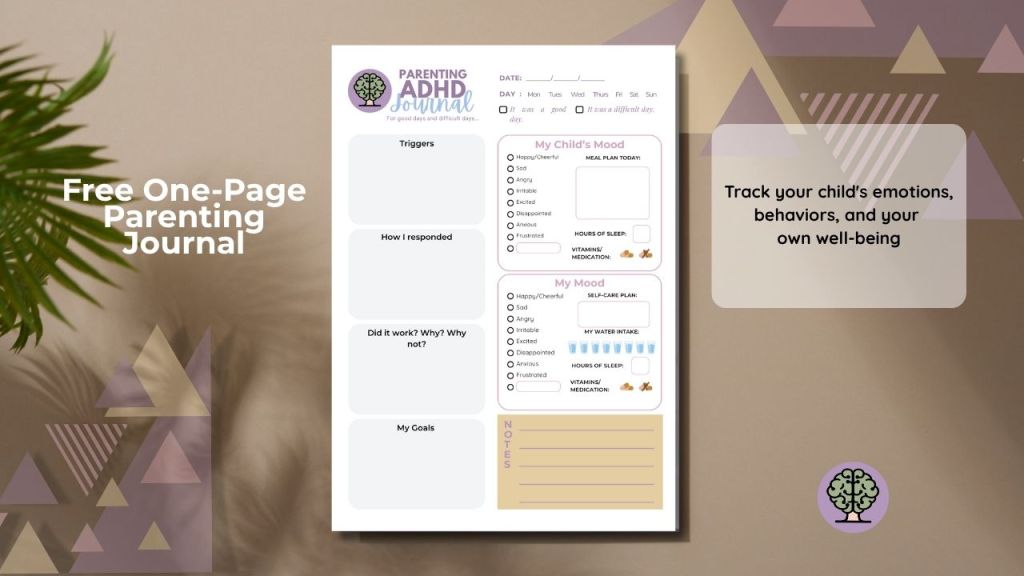
If you’ve been busy everyday regulating your emotion, as well as managing your ADHD child’s emotions, chances are you’re running very low on fuel. There were days (weeks) when I would breakdown at every little inconvenience and it’s unfair to everyone (including myself). So I decided to write a journal that would help me re-frame my thinking. Instead of worrying and thinking about all the things I did wrong, I forced myself to think about the things that did go well. You can download what I used for free:
Hope this helps!



 ADHD KIDS TOOLBOX
Leave a comment