

Scroll down for the free morning routine download.
One thing I’ve learned about routines with ADHD kids—and honestly, kids in general—is this:
You don’t just tell them the routine.
You have to teach it.
I wish it was as easy as explaining what needed to happen, and my child would just… do it. But planning a routine is only the first step. If we didn’t do these steps, our mornings would still fall apart. There will be constant reminders, repeated instructions, and a lot of frustration on both sides.
Introducing a routine takes time. Here’s what worked for us:
Step 1: Talk About the Routine When They’re Calm
We talk about the routine when our child is relaxed—usually later in the day or in the evening (or during the weekend). That’s when he is more open, more focused, and actually able to take things in.
We go through the steps together and talk about what mornings should look like. It’s like we’re reading a story, really. Repeat many times as needed.
Step 2: Introduce Rewards (If It Works for Your Child)
Depending on your child’s age, you can introduce a simple reward system.
Talk about how your child could earn stars for completing each step, and what those stars could lead to. It gives them something to work toward, especially in the beginning when the routine still feels new.
For our older ADHD son, we started giving him stars that earned him screen time when he was 7 years old. For our toddler, we didn’t bring it up yet. But the rewards could be as simple as giving stickers. He loves them!
This isn’t about bribing. It’s about making effort visible and motivating, especially for ADHD kids who often need more immediate feedback.
Step 3: Practice the Routine Together
For the first few days, we can’t expect independence.
It’s important to go through the routine together. Step by step.
If you’re using a visual routine:
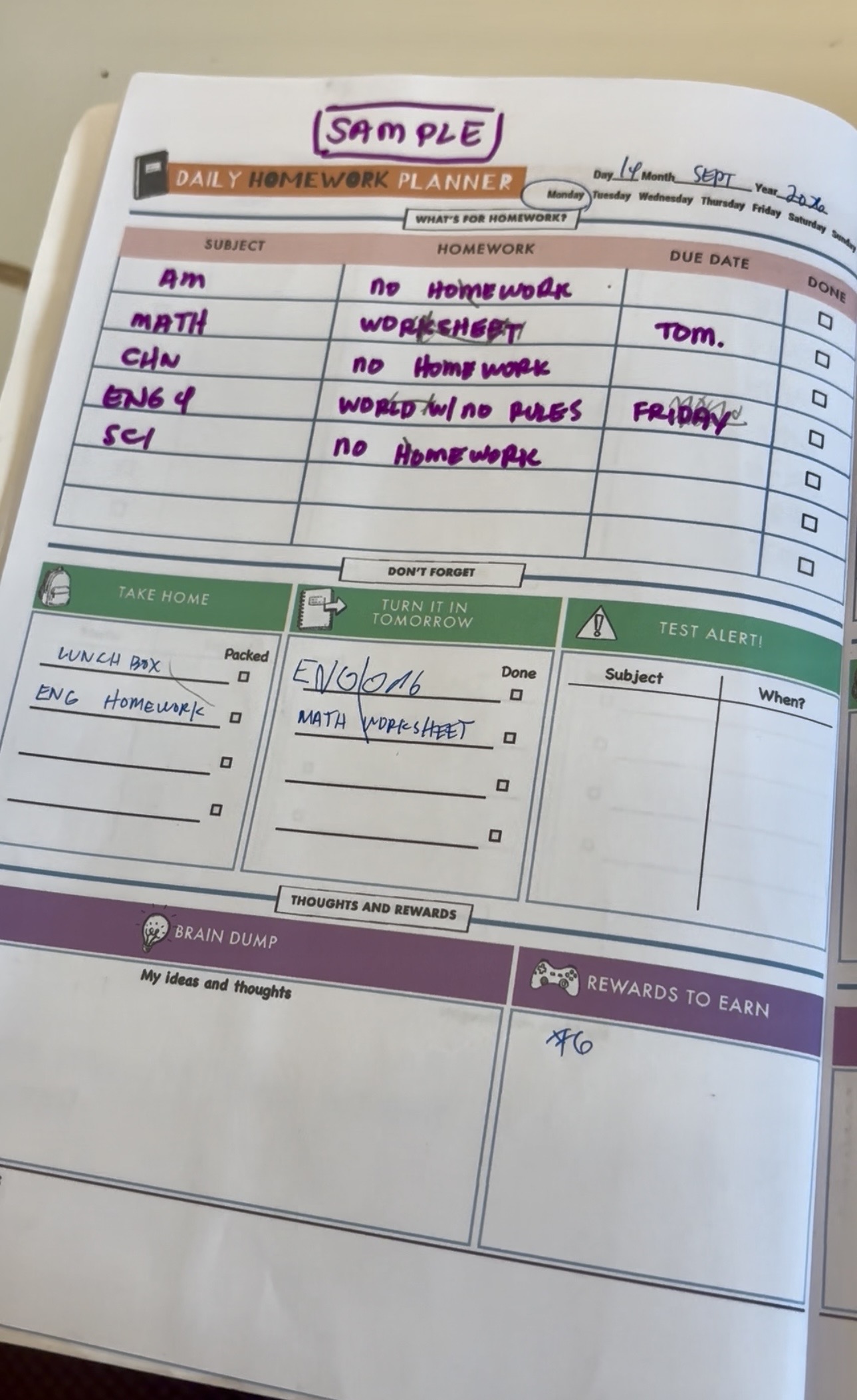
- let them flip the page
- or check the box
That physical action helps reinforce the sequence in their memory. It also gives them a sense of progress and control.
It may take a couple of days or a week.
And that’s okay.
Just like any new skill, routines take repetition. The goal isn’t to get it perfect right away—it’s to build familiarity.
Step 4: Start Asking “What’s Next?”
Once the routine starts to feel familiar, we shift how we guide them.
Instead of saying,
“Brush your teeth,”
“Get dressed,”
“Pack your bag,”
We start asking:
“What’s next?”
This small change encourages your child to think instead of just follow instructions. It builds independence and helps them internalize the routine over time.
Step 5: Praise and Reinforce Every Step
This part is important, especially in the beginning.
Every completed step gets attention.
We praise. We acknowledge. We celebrate small wins.
Over time, this builds confidence. They start to feel like, “I can do this on my own.”
Slowly and as they get older, you can add more steps into their routine. For example, making their bed or putting their plates in the sink.
What We Use at Home
We’ve created a two versions of our morning routine depending on age and needs.
👉 Toddler-Friendly Morning Routine
Simple, visual, step-by-step.

👉 FREE Minimalist Morning Routine for Older Kids
This is what we used with our ADHD son when he was 7.
This is the link to the full version:

PRO TIP:
Use a visual timer or music when they brush teeth so they don’t take forever! This is the visual timer we use.
Lastly, teaching a routine takes time.
And let’s be real. Even when they’ve mastered the routine, there will still be messy mornings. There will still be days when nothing goes as planned.
That’s also normal. Just keep going!
Note: Some links in this post are affiliate links. I may earn a small commission from qualifying purchases at no extra cost to you.





Leave a Reply