

This post contains affiliate links. I may earn from qualifying purchases at no extra cost to you.
As I write this, our son is 9 years old and in Grade 3. Overall, he’s doing well in math. He understands new concepts quickly and can usually complete his homework independently.
Like many children with ADHD, though, he sometimes misses small details in word problems. More often than not, he knows how to solve the problem—I just have to point out the part of the question he overlooked when we’re checking his work together.
Looking back, I found myself wondering what had actually helped him develop a positive relationship with math.
The truth is, we weren’t following a special curriculum or expert-designed program. My husband teaches visual arts, and I worked as an early childhood educator. We simply wanted math to feel enjoyable enough that our son wouldn’t grow up dreading it.
What surprises me now is that many of the things we naturally gravitated toward are strategies that are often recommended for supporting children with ADHD. We didn’t know he had ADHD at the time, but we instinctively kept lessons short, used hands-on materials, relied on visual supports, and regularly introduced new activities to keep things interesting.
Every child is different, so I can’t promise these resources will work for everyone. But they worked well for our family, and I hope they give you a few ideas to try with your own child.
Here are the books, activities, apps, and strategies that supported our son’s math learning from toddlerhood through Grade 3.
Toddler Years (Ages 2–4): Build Number Sense Through Play
As I mentioned earlier, I worked as an early childhood educator and received Montessori training. Our son also attended a Montessori preschool as a toddler.
He absolutely loved the freedom to explore and choose activities that interested him. At the same time, he found some parts of the classroom more challenging, particularly following multi-step instructions and managing his impulses. (I’ll save that story for another post.)
When he was around three years old, I stopped working and began bringing Montessori-inspired activities into our home. Although he attended preschool, there were days when I chose to keep him home so we could learn together at his own pace.
One thing I appreciated about the Montessori approach was how hands-on it was. Instead of asking young children to memorize abstract concepts, they could touch, move, count, trace, sort, and explore. Those concrete, interactive activities suited the way our son learned. Many of these experiences kept him engaged and made early math feel like play rather than work.
Here are some of the books, hands-on materials, and apps we used during his toddler and preschool years.
Counting books
Before our son could even read, we regularly read counting books together.
Some of our favorites were:


These books naturally introduced counting while telling an engaging story.
Montessori-inspired activities
Along with books, we also brought some of the Montessori math activities I had used in my classroom into our home.
One thing I loved about these materials is that they let children see, touch, and move mathematical concepts instead of simply memorizing them. Looking back, these hands-on activities were a great fit for our son.
A few important things that worked well for us:
- We kept each activity to about 10 minutes or less.
- I rotated the materials regularly to keep things interesting.
- We stopped while he was still enjoying it instead of waiting until he became frustrated.
Montessori Materials We Used

Later, we paired the cards with small objects—cars, dinosaurs, LEGO bricks, or whatever he was interested in that week—and matched the correct number of objects to each numeral.
Changing the objects regularly kept the activity feeling new without having to buy anything extra.

Instead of just hearing that 10 is bigger than 1, or 100 is bigger than 10, he could actually hold the difference in his hands.
These materials helped him understand place value in a very concrete way:
Ones
Tens
Hundreds
Thousands
Long before he was expected to solve larger numbers on paper, he could already visualize what those numbers represented.


This is my toddler (3 years old). We used to do the same activities with my ADHD son (9) when he was younger.
You don’t need official Montessori materials to try these activities.
Many of the same concepts can be practiced with everyday objects like buttons, toy cars, blocks, LEGO bricks, pom-poms, or even snacks.
For us, the goal was never to recreate a Montessori classroom at home. It was simply to make early math something our son could explore with his hands.
Preschool: A Little Screen Time That Actually Helped
For parents who don’t mind some educational screen time, one app our son genuinely enjoyed was Math Tango.

The biggest motivation wasn’t actually the math. It was the monsters.
Completing math activities unlocked new monsters, which kept him coming back.
Of course, there were days when he became more interested in collecting monsters than doing the exercises, so I occasionally had to remind him that the monsters only came after the math.
We stopped using the app around by the end of Kindergarten, but it was a fun way to do addition and subtraction exercises.
Grade 1: This Was When Math Became Hard
First grade was when we realized our son needed more support. His frustration tolerance was low, and homework that should have taken 10 minutes often turned into long crying sessions saying ‘he can’t do it.’
This was probably when his ADHD became more noticeable. We didn’t know it was ADHD then—we just knew something wasn’t quite right.
When he got stuck on addition, I started drawing simple diagrams to help him visualize the numbers. For example, instead of solving 8 + 7 all at once, we’d split the 7 into 2 and 5, make a friendly 10, and then add the remaining 5. Those quick sketches often worked better than repeating the instructions.
Around this time, his teacher also recommended reading math-themed picture books. As someone who already loved using children’s books for learning, I immediately started collecting them. These books were an excellent supplement to his math learning!


Multiplication: Memorization is Boring
When multiplication started, I did what many parents do. I bought multiplication charts – which did absolutely nothing. My son was immediately bored.
Then I found TimesTables the Fun Way! The problems have funny visual stories that helped my son easily recall the answers. Check it out below:

Whenever he would get frustrated over a multiplication problem, I can give him visual prompts and it immediately changes his mood.
What Worked Better Than Endless Worksheets
One little change that made the biggest difference was reducing the exercise questions. In first grade, they were given a book filled with pages and pages of addition and subtraction drills (called 口算). There were probably more than 50 items in one page for students to do. I remember when one look at the page sends my son into panic mode, crying and screaming, ‘I can’t do this!”. He can. But it’s just too much and too overwhelming.
Here’s an example of what it looked like:

Grade 2
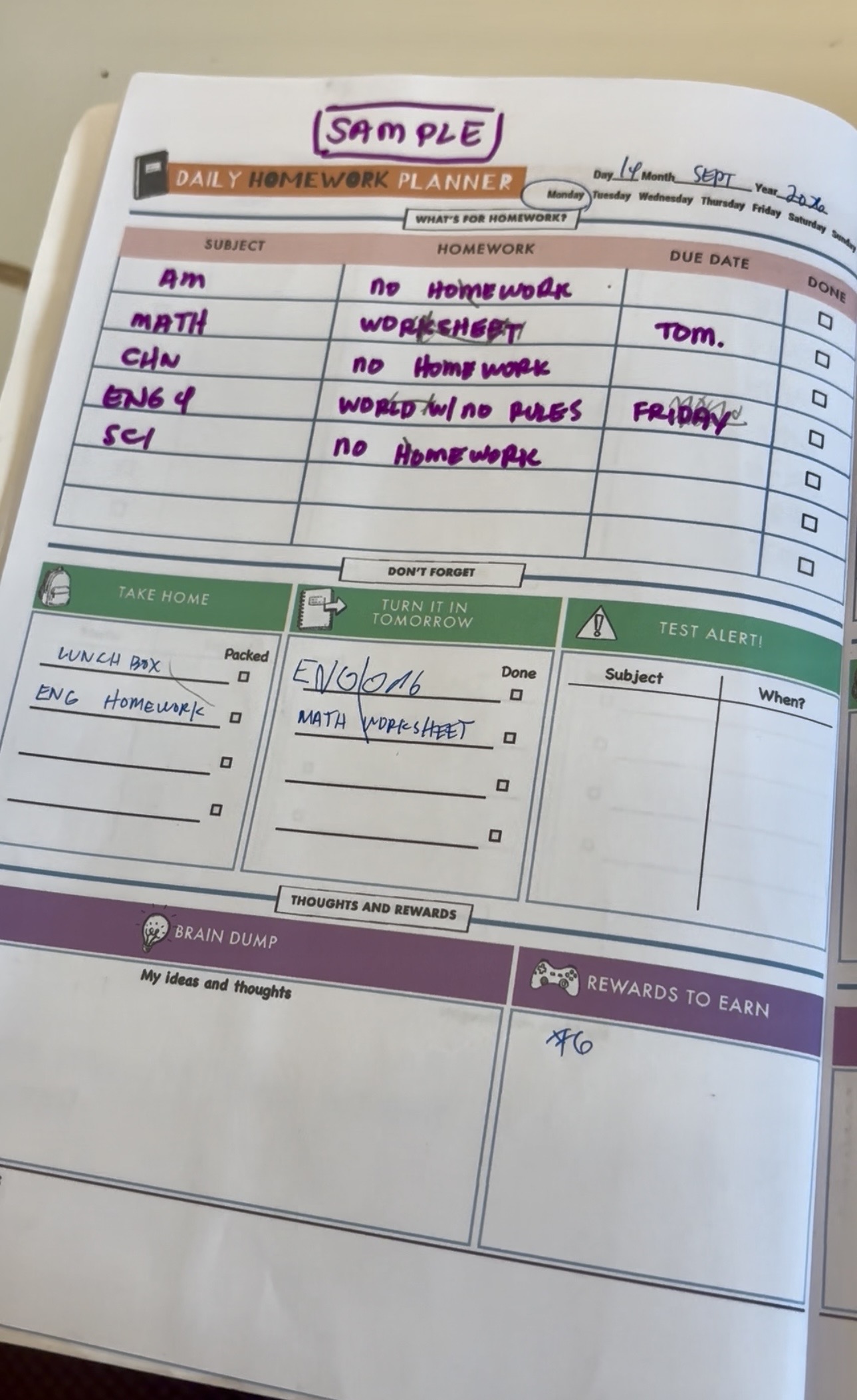
Before 2nd grade, he was diagnosed with ADHD. We understood that we had to change our expectations. Completion wasn’t our goal. We had to establish a homework routine that will build his confidence in his ability to get things done. To help him, we started doing the following:
- broke the page into smaller sections – We would say, today just finish the first column. Sometimes, he would want to impress us and do two columns!
- rewarded each completed column (10 minutes of screen time, snack break, play break, movement break)
- spread the work throughout the evening (sometimes, continuing the next day)
- or simply stopped once it was clear he understood what he was doing
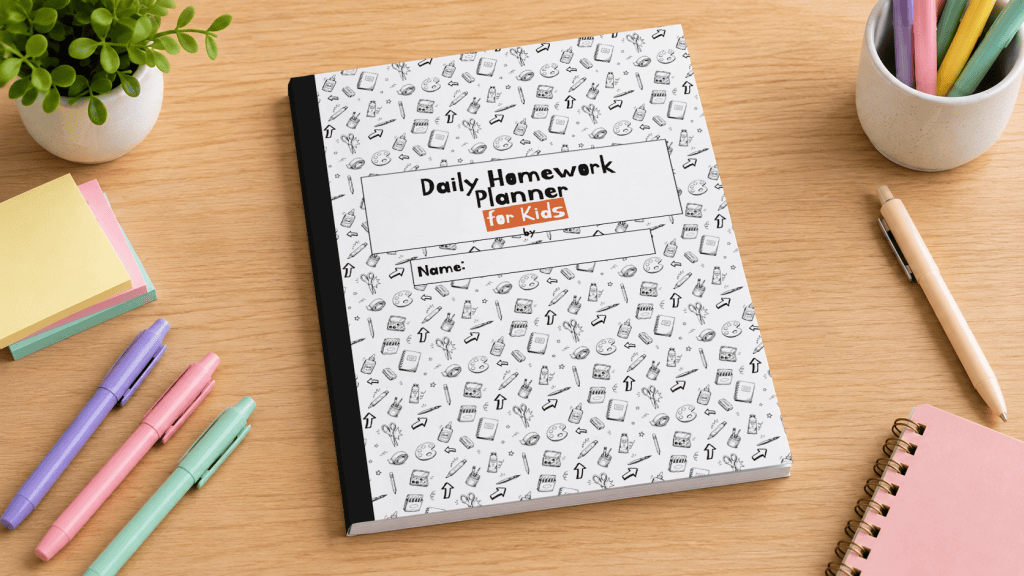
During that time, we built a very good homework routine. I’ve compiled the visuals we used in the beginning, which you can download for free here:

FREE Homework Success Starter Pack
Struggling with homework battles?
Download our free Homework Success Starter Pack with checklists, routines, reward charts, and simple systems that helped our family reduce stress and support independence.
Grade 3
In grade 3, this changed. His math teacher often sent home one page with only 5–8 carefully chosen questions. Those worked wonderfully. That reduced everyone’s frustration while still allowing him to learn. I believe that the reduced workload also helped build his independence in doing homework.
Here are the daily worksheets my son has accomplished in this school year (2025-2026) in 3rd grade:





Leave a Reply