
What I’ve learned as a parent of a child with ADHD is that frustration is one of those things we have to deal with many times in one day.
Sometimes it’s because of homework. Sometimes it’s a game. Sometimes it’s as simple as not finding something he’s looking for in the first 5 seconds he started looking.
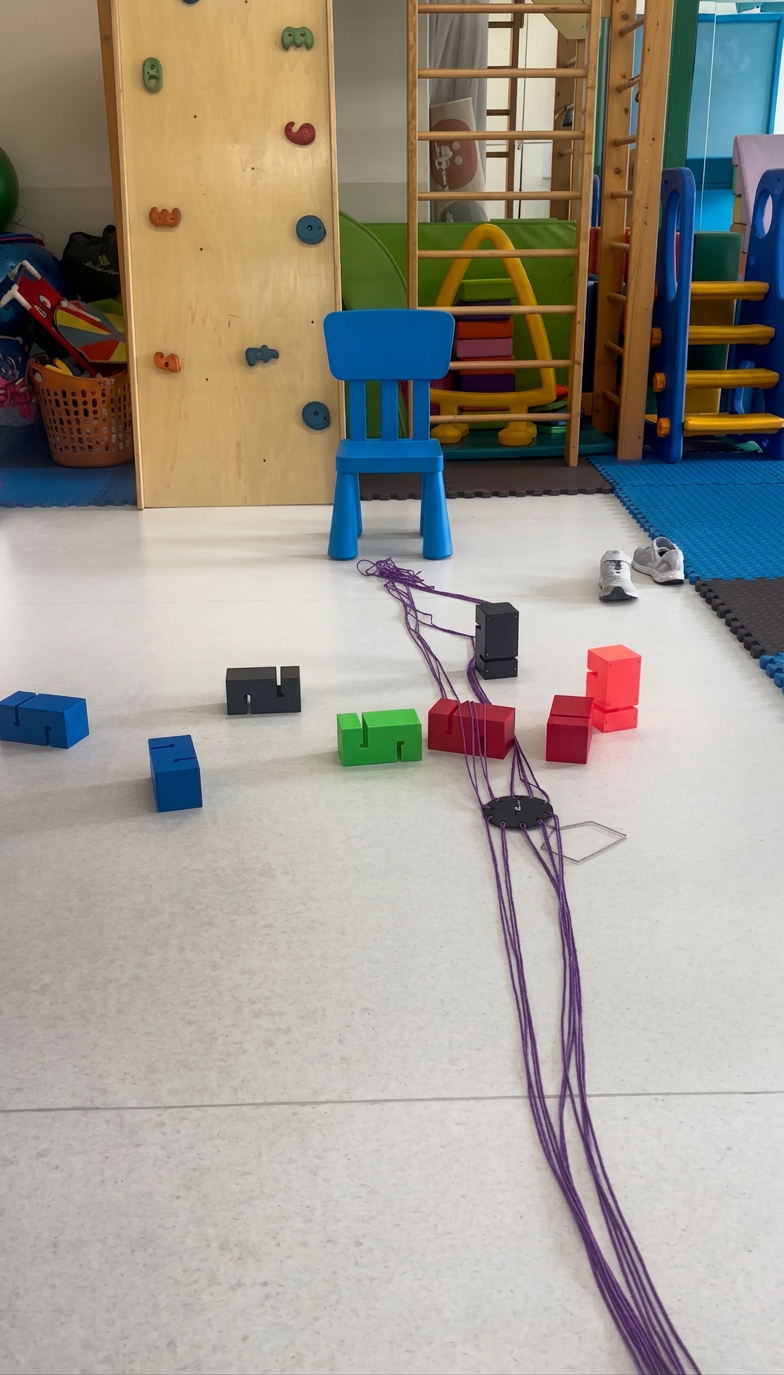
In our most recent occupational therapy session, the therapist used an activity that looked like a game but was really teaching much bigger skills.
They used a stacking tower.

My son had to work with the therapist (and then, me) using a hook attached to ropes to pick up and stack small towers. It required teamwork, communication, coordination, and a lot of patience. Every time the tower tipped over or things didn’t go as planned, there was an opportunity to practice frustration tolerance.
Note: This post contains affiliate links. I may earn a small commission from qualifying purchases at no extra cost to you.
Deep Breathing Needs Practice
Before starting the activity, the therapist guided a short breathing exercise while monitoring heart rate. Later, whenever frustration or anxiety started to build, they paused and returned to the breathing exercise. According to our therapist, the breathing activity helped my son feel refreshed and better able to participate in the task afterward.
As a parent, this was interesting to watch because at home, I’ve heard plenty of times from my son that breathing exercises “don’t work” and he would just refuse to do it.
But seeing it used during my ADHD son’s therapy session reminded me of one thing:
Many ADHD skills aren’t learned from just being told what to do.
How the Therapist Made it Work
The therapist guided the deep breathing exercise in a very practical way. My child lay down on a comfortable sensory cushion, which helped him settle into his body. She let him borrow her smartwatch and used an app called BreathHRV that vibrates once for inhaling and twice for exhaling (or vice versa) and counts the number of deep breaths taken in one minute.
At the start, when he was more excited, he did eight deep breaths in one minute. By the end of the session, he was down to six deep breaths, showing that he had become more relaxed and was able to engage better in the activity. This method made a skill that often “doesn’t work at home” suddenly effective in a real, supported environment.
Emotional Regulation Is a Skill
Dr. Russell Barkley often describes ADHD as a delay in executive function development. Executive functions include skills like managing emotions, tolerating frustration, and staying focused when things become difficult. Children with ADHD often need more external support while these skills are developing.
If you haven’t yet, I recommend that you read his book called the “12 Principles of Raising a Child with ADHD”. We’ve applied so many useful parenting tips from this book!

That’s why simply telling a child to “calm down” rarely works.
Just like riding a bike or learning multiplication tables, emotional regulation takes practice, coaching, and repetition.
Tools They Used in OT
If you’re looking for ways to practice these skills at home, here are the tools they used:
- Smartwatch to track breathing
- Stacking Tower
- Sensory cushions





Leave a Reply